The Hanover final
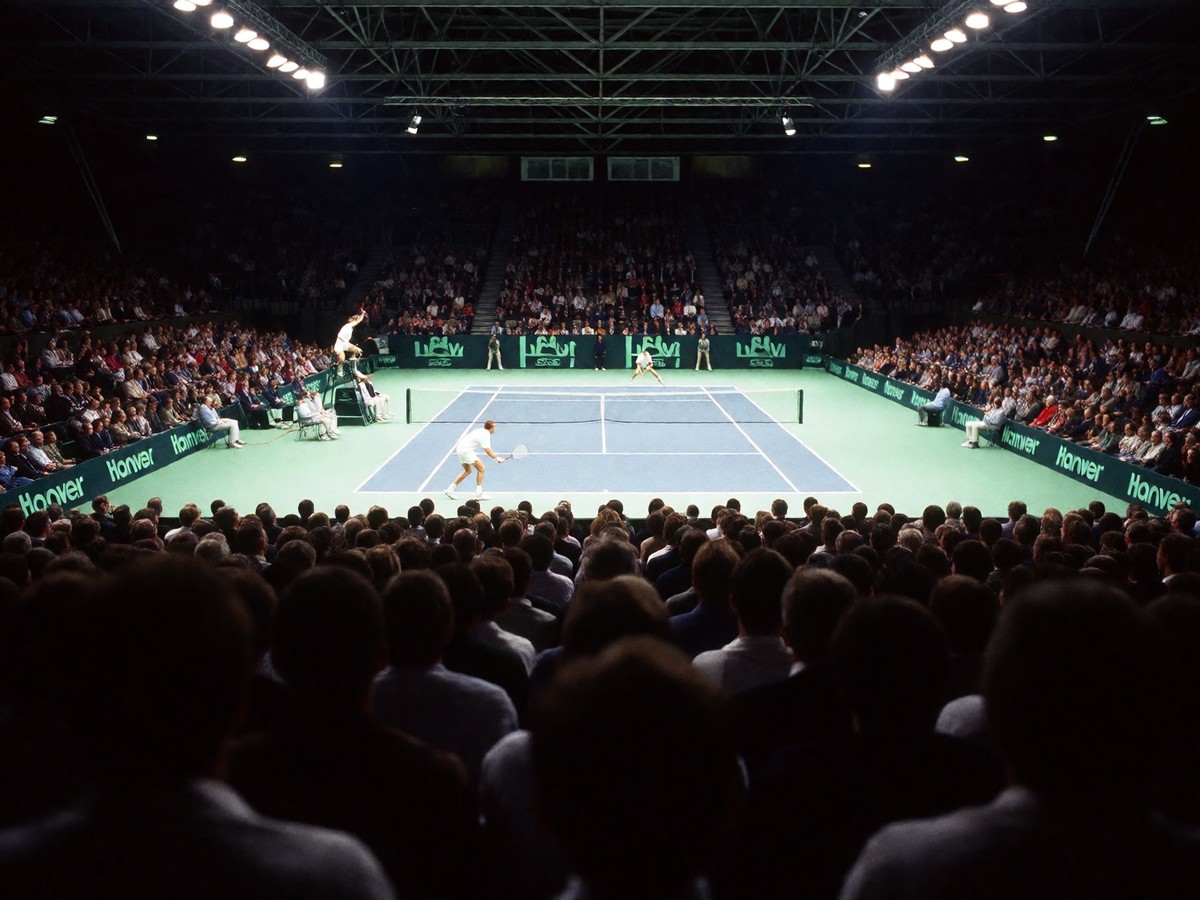
Pete Sampras defeated Boris Becker 3-6, 7-6, 7-6, 6-7, 6-4 to win his third ATP Tour World Championships title in Hanover, Germany, on November 24, 1996. The two champions played on a fast indoor surface, creating a match described as one of the greatest in tennis history. Becker, nicknamed "Boom Boom" for his powerful serve, won the first set 6-3. He broke Sampras at 2-1 after firing four consecutive aces to start the match. The German maintained his serve throughout the match and lost it only once.
| Match Metric | Value |
|---|---|
| Final Score | 3-6, 7-6, 7-6, 6-7, 6-4 |
| Sampras Head-to-Head | 9-7 |
| Becker ATP Finals Titles | 3 |
| Sampras Grand Slams (at match) | 7 |
The tournament, founded in 1970 as the Masters Grand Prix, moved from Madison Square Garden to Frankfurt before arriving in Hanover. Sampras, nicknamed "Pistol Pete" for his massive serve, entered the match with two previous Masters Cup titles from 1991 and 1994. Becker had won the tournament three times, in 1988, 1992, and 1995. Although Becker won their previous two encounters in Stuttgart and the Masters Cup round-robin, Sampras led their 16 career encounters 9-7.
Tiebreak battles and the deciding set
The match required tiebreaks to decide the second and third sets. Becker saved a double break point at 2-3 in the second set with a service winner and an ace. Sampras answered by saving two break points at 2-3 in the third set using back-to-back aces. The tension peaked at the end of the fourth set during a 24-point tiebreak, where Becker saved two match points at 5-6 and 8-9 before winning the set 13-11 to push Sampras into a deciding fifth set.
Sampras raised his level in the fifth set and broke Becker at 4-4 with a backhand passing shot winner. He then ended the match after a 24-stroke rally on the match point. "I’m sure if I would have lost, I would have been very disappointed," Sampras told The New York Times. He added, "But walking down those steps before the match and hearing that crowd; they are not rooting against me, they are rooting for Boris, and it was nice to be a part of that. That’s what this game is all about. It’s not the money. It’s the great matches, and this is one of the best matches I have ever been a part of."
Career trajectories for both champions
Sampras dominated the 1990s and reached world No. 1 in April 1993. He won four US Open titles in 1990, 1993, 1995, and 1996, and an Australian Open title in 1994. His 1990 US Open victory made him the youngest champion of all-time after he defeated Andre Agassi 6-4, 6-3, 6-2. While his serve-and-volley style worked on grass, his performance on clay remained limited, as his best result at Roland-Garros was a 1996 semi-final loss to Yevgeny Kafelnikov. Sampras finished six consecutive years at the top of the ATP ranking and would later retire in 2003 after winning his 14th Grand Slam. He accumulated 41 career titles, including seven Grand Slams and six Masters 1000 titles.
Becker, who reached world No. 1 in January 1991 after beating Ivan Lendl 1-6, 6-4, 6-4, 6-4, saw this match as his last major final. The German won his first Wimbledon in 1985 at age 17 by defeating Kevin Curren 6-3, 6-7, 7-6, 6-4. Becker also beat Stefan Edberg 6-4, 7-6 at Queen’s Club in June 1996. He claimed his last title in December 1996 at the Grand Slam Cup in Munich by defeating Goran Ivanisevic 6-3, 6-4, 6-4. In 1994, he reached the Wimbledon semi-finals and won the Stockholm title after beating the top three players in the world, finishing that year as world No. 3.
Becker noted, "Matches like that keep me in the game longer and longer." He also said, "At the end, it almost didn’t matter for me anymore who won. It was just so enjoyable and so emotional."