Hewitt clinches world No 1 ranking
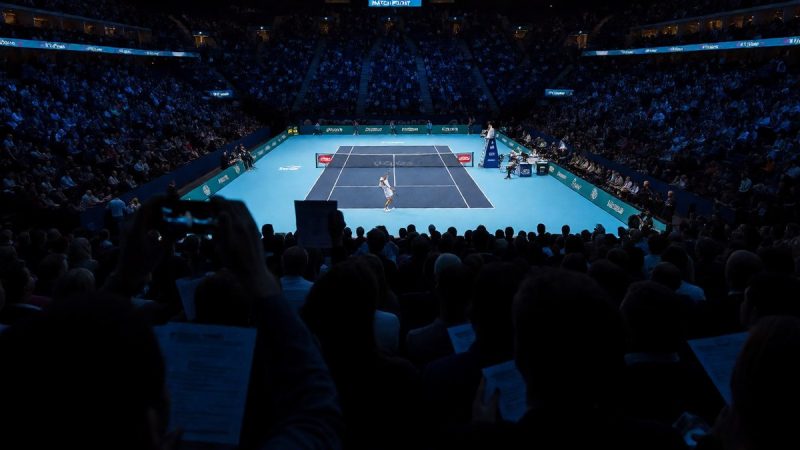
Lleyton Hewitt secured the ATP world No 1 ranking on November 16, 2001, after defeating Pat Rafter in the ATP Masters Cup round-robin. Hewitt, the world No 2, beat the Australian 7-5, 6-2 at the 17,000-seat Sydney Superdome. This victory guaranteed that the 20-year-old would become the youngest world No 1 in tennis history upon the release of the new rankings on November 19. Because Gustavo Kuerten lost all three of his matches and Andre Agassi lost to both Sebastien Grosjean and Hewitt, the year-end top spot fell to the Australian player after the round-robin stage in Sydney concluded. Hewitt required only this third match victory to claim the top position. He felt the pressure of becoming the new world No 1 at the last minute and required six match points before he sealed the win 7-5, 6-2. His performance in Sydney clearly makes him the most successful player of the 2001 season.
Rise of the young Aussie
The 20-year-old Hewitt, known as "Rusty" by coach Darren Cahill, arrived in Sydney as the US Open champion after he defeated Pete Sampras 7-6, 6-1, 6-1 in the final. His rise to the top included winning his first ATP title in Adelaide in 1998 before his 17th birthday, where he beat Andre Agassi 7-6, 7-6 and Jason Stoltenberg 3-6, 6-3, 7-6. In 1999, he claimed a second title in Delray Beach by defeating Xavier Malisse 6-4, 6-7, 6-1 and ended the season ranked world No 25. In 1997, at age 15, Hewitt became the youngest qualifier in the history of the Australian Open by winning three matches, though Sergi Bruguera defeated him 6-3, 6-4, 6-3 in the first round of the main draw. His 2000 season included winning the Queen’s Club Championships by defeating Sampras 6-4, 6-4, and he reached the US Open semi-finals, where Sampras won 7-6, 6-4, 7-6. Rafter, who turned professional in 1991, achieved his first US Open title in 1997 by defeating Andre Agassi 6-3, 7-6, 4-6, 6-3 and Greg Rusedski 6-3, 6-2, 4-6, 7-5. Although John McEnroe criticized Rafter in 1998 for being a one-Slam wonder, the Australian won the Toronto and Cincinnati titles that summer, including a win over Sampras. Bud Collins described Rafter as "a humble man known for a gracious manner on the court, great generosity and a gentlemanly demeanour at all times". Rafter also reached the Roland-Garros semi-finals in 1997, where he lost to Sergi Bruguera 6-7, 6-1, 7-5, 7-6. Following a win over Michael Chang 6-3, 3-6, 6-4 and a final victory over Mark Philippoussis 6-3, 3-6, 6-2, 6-0, Rafter secured his 1998 US Open title.
Longevity and retirement
Hewitt will hold the top spot for a total of 80 weeks, which includes his entire 2002 season. He won Wimbledon in 2002 by defeating David Nalbandian 6-2, 6-3, 6-2 and won the Tennis Masters Cup by beating Juan Carlos Ferrero 7-5, 7-5, 2-6, 2-6, 6-4. He will win the 2001 Masters Cup title a few days after the Rafter match by defeating Sebastien Grosjean 6-3, 6-3, 6-4. Hewitt eventually lost the No 1 ranking in 2003, and later finished as a runner-up at the 2004 US Open to Roger Federer 6-0, 7-6, 6-0 and the 2005 Australian Open to Marat Safin 1-6, 6-3, 6-4, 6-4. Rafter ended his career in 2003 following shoulder surgery, whereas Hewitt suffered from injuries to his knees, hips, hand, wrist, back, and feet. Rafter reached the Wimbledon semi-finals in 1999, where he lost to Agassi 7-5, 7-6, 6-2, and he finished as runner-up in the 2000 Wimbledon final to Sampras 6-7, 7-6, 6-4, 6-2. He also lost the 2001 Wimbledon final to Goran Ivanisevic 6-3, 3-6, 6-3, 2-6, 9-7. Rafter won his only title before 1997 at the 1994 Manchester Open.