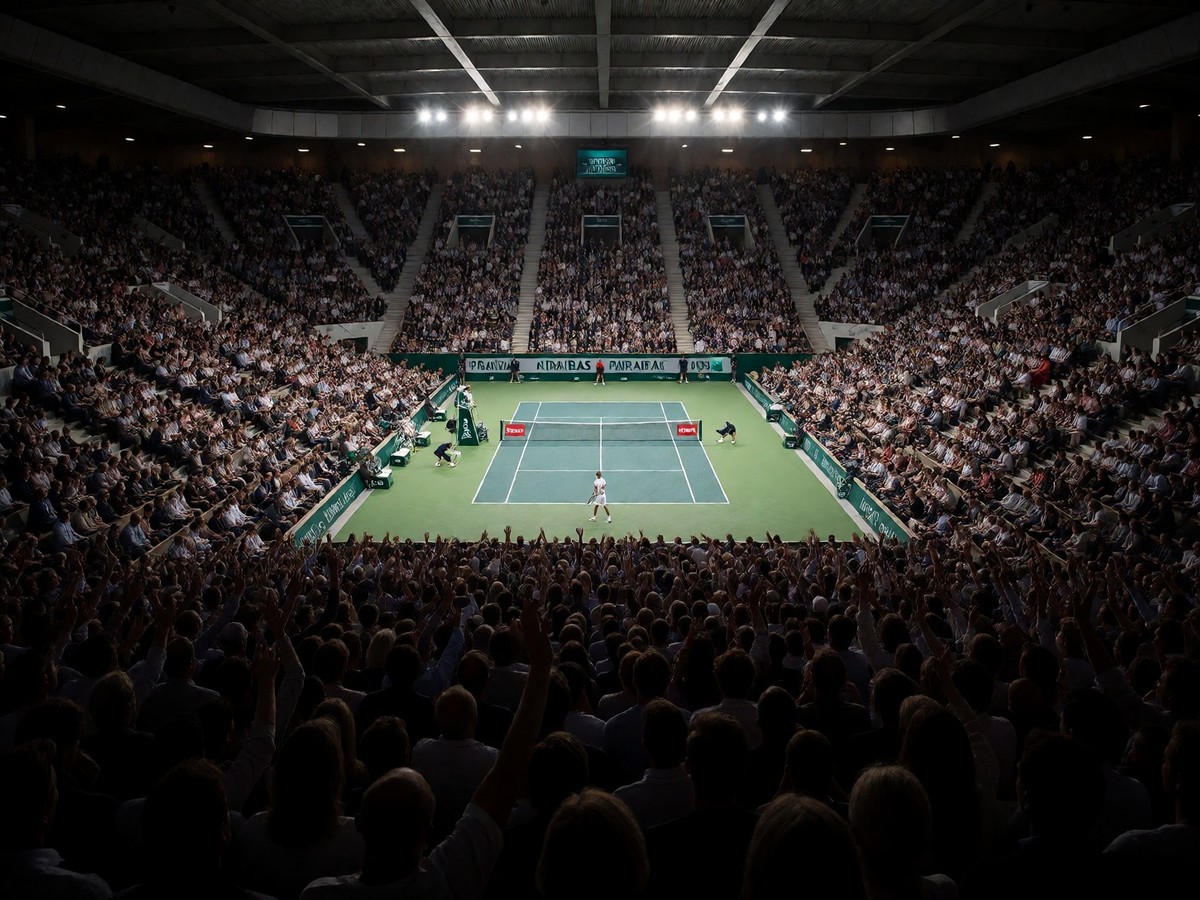
On November 7, 1993, Goran Ivanisevic defeated Andrei Medvedev in the Paris Indoor Open final with a score of 6-4, 6-2, 7-6. The Croatian left-hander fired 27 aces and 32 service winners, a performance so dominant that sections of the crowd began booing his unreturned serves. This incident remains one of the most cited examples of "servebot tennis," where a player’s first strike is so effective it renders the rest of the match a formality. I find this specific match particularly fascinating because it directly triggered changes to how tennis authorities manage ball speed and surface conditions on indoor courts.
A Masterclass in First Strike Dominance
Ivanisevic entered the tournament seeded ninth after a difficult 1993 season marked by a foot injury before the Australian Open. He had recovered his form on indoor surfaces, claiming titles in Bucharest and Vienna, where he beat Thomas Muster in four sets. In Paris, he dismantled three top 10 players en route to the final: Michael Chang (7-6, 7-5), Pete Sampras (7-6, 7-5), and Stefan Edberg (4-6, 7-6, 7-6). Across those matches, he served 70 aces, signaling an intent to dominate from the service box. Against Medvedev, who was ranked No 8 at the time, Ivanisevic held serve in 15 games and won the tie-break without ever needing to hit a second shot effectively. The numbers are stark: nearly every point ended on his serve.
Medvedev, a Ukrainian prodigy who had already earned $1 million in prize money by age 19, was left clueless. He had reached the final after defeating Sergi Bruguera in Barcelona earlier that year, but against Ivanisevic’s pace, he had no answer. Vincent, a spectator present at the arena, recalled the atmosphere shifting from support to hostility. "I didn’t boo him because I was a big fan," Vincent said. "However, I must admit that there wasn’t much to see on his service games and it wasn’t a great final to watch." The booing was a direct protest against the lack of rallies, a sentiment shared by many who felt the game had become too one-sided.
Consequences for the Game’s Pace
Ivanisevic remained unperturbed by the hostile reception. According to the Los Angeles Times, he stated, "I don’t care… They want five sets, but I don’t want to play five sets." His victory sealed his place as a formidable force on indoor courts, though he would not reach world No 1 until later in his career. The backlash from this match, combined with similar performances in 1994, forced the ATP to reconsider its approach to fast surfaces. Mark Miles, director of the ATP, declared in late 1994 that they wanted to "enhance tennis on our faster surfaces" by working with the combination of surface and balls rather than changing rules. Patrice Clerc, the Paris Open tournament director, agreed, stating that they should not look to change the rules of tennis but adjust the equipment.
Most indoor tournaments quickly adopted heavier balls and slowed down their surfaces to encourage longer rallies. At Wimbledon, the board eventually changed the composition of the grass, a move that slowly doomed the serve-and-volley game to all but disappear from the All England Club. Ivanisevic continued to thrive, reaching a second Wimbledon final in 1994 and achieving his highest ranking of world No 2. He served an unbroken record of 1,477 aces in one season in 1996. Despite these achievements, the 1993 Paris final stands as a clear example of how extreme serving dominance can alienate spectators. The crowd’s reaction was not just about preference; it was a demand for competitive balance that the sport’s governing bodies eventually addressed through technical adjustments.