Becker stops Sampras in five sets
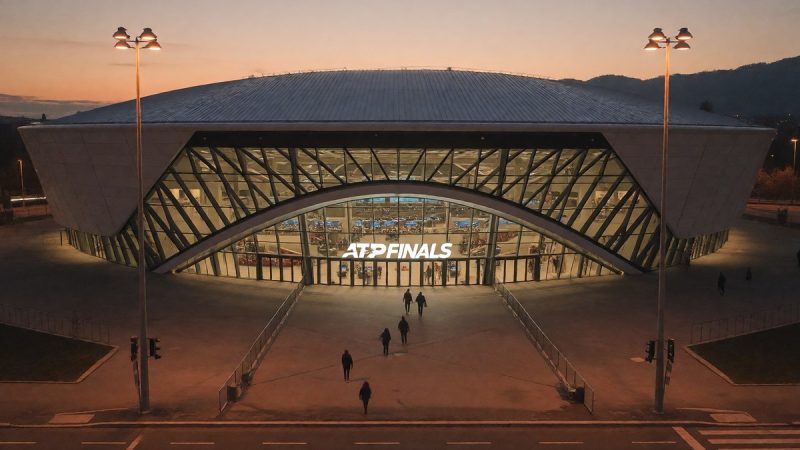
Becker defeated Pete Sampras in the ATP Stuttgart Masters 1000 final on October 27, 1996, with a score of 3-6, 6-3, 3-6, 6-3, 6-4. This victory gave Becker his 48th title and ended Sampras’ streak of eight consecutive finals wins since October 1995. I view the five-set serve-and-volley masterclass as a definitive display of Becker’s indoor strength. Both players reached the final without dropping a single set during the tournament, but Becker’s serve was so sharp that he stormed through his first three rounds without facing a single break point. Becker fired 29 aces during the match and won only two more points than Sampras, with a total of 139 to 137. The Stuttgart Indoor Open started in 1979 as part of the Grand Prix Circuit. It moved off the calendar from 1981 to 1989 and returned in 1990 as a Championship Series event held in February. In 1996, the tournament replaced Essen in the Masters 1000 category and attracted 29 of the 30 best players in the world. Sampras salvaged his 1996 season by winning the US Open against Michael Chang 6-1, 6-4, 7-6 (3). This followed his loss to Richard Krajicek in the Wimbledon quarter-finals. Becker, who was the runner-up to Sampras at the All England Club in 1995, had also reached the semi-final at Flushing Meadows that year. He previously finished the 1994 season as world No 3 after he reached the Wimbledon semi-finals and won the Stockholm title, where he beat the three best players in the world.
The players and their paths
Sampras, born in Washington DC in 1971, dominated men’s tennis in the 1990s and became world No 1 in April 1993. He won three consecutive All England Club titles between 1993 and 1995, winning 25 matches in a row until Richard Krajicek beat him in the 1996 quarter-finals. He won the US Open in 1990, 1993, 1995, and 1996. In 1990, he became the youngest champion of all time by crushing Andre Agassi 6-4, 6-3, 6-2. In 1996, he defeated Michael Chang 6-1, 6-4, 7-6 (3) to claim his fourth US Open title. His clay court performance remained a weakness, as he only won one tournament on red clay and lost in the 1996 Roland-Garros semi-finals to Yevgeny Kafelnikov. Sampras had also dealt with the death of his coach, Tim Gullikson, in May.
Becker, born in Leimen in 1967, became the youngest-ever Wimbledon champion in 1985 when he beat Kevin Curren 6-3, 6-7 (4), 7-6 (3), 6-4. He earned the nickname "Boom Boom" for his powerful serve. I think his 1989 to 1991 period was his peak, during which he claimed three Grand Slam titles and reached world No 1 after beating Ivan Lendl 1-6, 6-4, 6-4, 6-4. After a wrist injury kept him away from the circuit for much of the year, he won his sixth Grand Slam in Melbourne in 1996. Sampras paid tribute to the German, saying, "Becker is the best indoor player I’ve ever played." He added, "There’s only one king in Germany and his name is Boris." Becker spoke about his fifth-set struggle and said, "My muscles started to hurt in the fifth set, but I gritted my teeth and hung on."
Later encounters and career paths
Sampras gained revenge a few weeks later at the ATP Masters Cup in Hanover, Germany. Although Becker won the round-robin match 7-6 (10), 7-6 (4), Sampras won the final 3-6, 7-6 (5), 7-6 (4), 6-7 (11), 6-4. This Stuttgart win remained Becker’s last Masters 1000 title. In December, he won his last Grand Slam title at the Grand Slam Cup in Munich by defeating Goran Ivanisevic 6-3, 6-4, 6-4. Becker finished his career with a 7-12 win-loss record against Sampras. Sampras, who retired in 2003 after he won his 14th Grand Slam at the US Open, stayed world No 1 until the end of 1998. He had accumulated 41 titles in his career, including seven Grand Slams and six Masters 1000s.